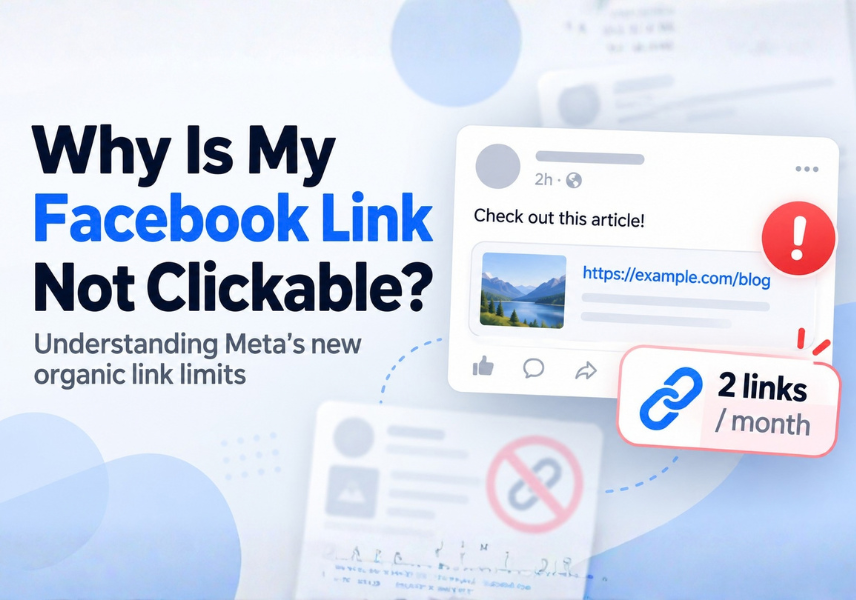
You create a Facebook post, paste a link to your website, blog, product page, event, or registration form — but after publishing, something is different.
The URL is there, but it is no longer clickable.
If this has recently happened to your Facebook Page, it may not be a technical problem with your website or your URL. Meta has started rolling out new restrictions on external links for some Facebook Pages and professional accounts.
For businesses that use Facebook to send visitors to their websites, this could significantly change how organic Facebook marketing works.
Did Facebook Limit External Links?
For some Facebook Pages, yes.
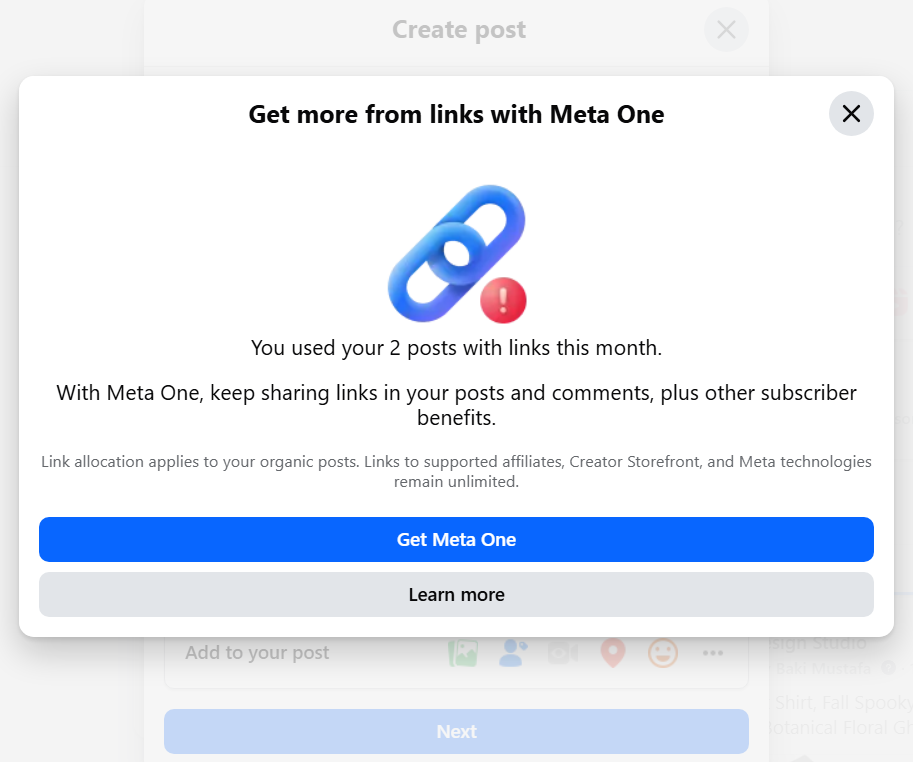
Meta has been testing restrictions that limit certain Pages to links in only two organic posts or comments per month unless the account has an eligible Meta One subscription.
However, there is an important distinction:
The restriction does not currently apply to every Facebook Page.
Reports from Page managers show that the limit is being introduced gradually, meaning one business may encounter the restriction while another Page can still publish external links normally.
Meta itself says that Meta One features, pricing, benefits, and availability may vary depending on the region, app, and account. Meta One is also being rolled out gradually.
This explains why some Facebook administrators are seeing links become unclickable while other Pages appear unaffected.
Why Is Facebook Limiting Links?
The change comes alongside the introduction of Meta One, Meta’s new subscription service for individuals, creators, and businesses.
Meta officially introduced Meta One on September 15, 2026.
For businesses and creators, Meta One includes several subscription levels. Meta describes its Advanced plan as including professional publishing features such as:
- links in organic posts and Reels
- Story scheduling up to 30 days in advance
- exportable analytics
- deeper audience insights
- team account access
- additional business tools
The Advanced business plan starts at $49.99 per month, although Meta states that pricing and features can differ by region and account.
The timing is important.
External links have historically been a standard part of Facebook Page publishing. Businesses could create a post and direct followers to their own websites without paying Facebook simply for the ability to make the URL clickable.
Meta is now experimenting with putting greater external-link publishing capacity behind its subscription products.
Does Putting the Link in the First Comment Still Work?
This has traditionally been a common social media tactic.
Instead of placing the URL directly in the Facebook post, marketers publish the content first and then add the website link in the first comment.
Under the new system being tested, this does not necessarily solve the problem.
Facebook’s link restriction can apply to both organic posts and comments, meaning placing the external URL in the first comment can still use one of the available link posts/comments.
Businesses should therefore not build their strategy around the assumption that the first-comment workaround will continue to bypass Facebook’s link restrictions.
Should Businesses Pay for Meta One Just to Post More Links?
Not automatically.
Before subscribing, businesses should first determine whether the restriction has actually been activated on their Facebook Page.
Meta’s rollout is not identical across all accounts.
If your Page can still publish external URLs normally, changing your strategy immediately may be unnecessary.
If your Page has received the restriction, the next question should be:
“How much valuable website traffic are those organic Facebook links actually generating?”
A business publishing several links every week might benefit from additional publishing capacity.
But if organic Facebook links generate very few website visits or conversions, paying a monthly subscription simply to restore additional links may not be the best marketing investment.
The decision should be based on data rather than the number of links alone.
Check:
- outbound clicks from Facebook
- website sessions originating from Facebook
- leads or sales generated from those visits
- conversion rate
- revenue or business value created by Facebook traffic
Then compare that value with the subscription cost.
What Should Businesses Do Instead?
The change does not mean businesses should stop using Facebook.
It does mean Facebook strategy should become less dependent on organic outbound links.
1. Use Your Most Important Links Strategically
If your Page is limited to two external link posts per month, reserve them for content with a clear business objective.
For example:
- an important registration deadline
- a major promotion
- a high-value landing page
- a new service launch
- an enrollment campaign
Do not waste limited external links on posts that do not need them.
2. Create More Native Facebook Content
Facebook increasingly favors experiences that happen inside its platform.
Businesses can therefore create posts that deliver value without requiring users to leave Facebook immediately.
Videos, Reels, images, educational posts, testimonials, FAQs, and community content can continue building awareness and engagement without an external URL in every post.
3. Make Your Page Profile Work Harder
Your Facebook Page’s website and profile information become more important if individual organic posts contain fewer clickable links.
Instead of attaching the website to every post, businesses can occasionally direct users toward the Page’s main website link.
4. Use Meta Lead Ads When Lead Generation Is the Goal
Businesses collecting leads do not always need to send people to an external website.
Meta lead campaigns can allow users to submit information through forms directly inside Facebook or Instagram.
For the right campaign, reducing the number of steps between seeing an advertisement and submitting an inquiry can be useful.
5. Use Paid Campaigns for Important Website Traffic
Organic social media and performance advertising serve different purposes.
If driving users to a website is commercially important, relying entirely on organic Facebook distribution has always carried platform risk.
Meta Ads can provide more predictable website traffic because businesses can target specific audiences, control budgets, measure results, and optimize campaigns around actions such as leads, purchases, or registrations.
Is This the End of Organic Facebook Marketing?
No.
But it is another reminder that businesses do not own their social media audiences.
Facebook, Instagram, TikTok, LinkedIn, and other platforms can change algorithms, publishing features, reach, and pricing at any time.
Your website, CRM, customer database, and email list therefore remain important parts of a sustainable digital marketing strategy.
Social media should help businesses reach and engage audiences, but it should not become the only connection between a company and its customers.